Exploring Educational Collaborations: A Journey Through Piauí's Schools and Universities
June 3, 2024
Visit to CEEP José Pacífico de Moura Neto, Universidade Estadual do Piauí, Education Channel (Canal Educação), and Universidade Federal do Piauí (UFPI)
On the second day of our trip, representatives from State and Investepiaui organized a visit to understand the local school systems and explore potential collaborations.
First Stop: CEEP José Pacífico de Moura Neto
CEEP José Pacífico de Moura Neto is a public state school located in Teresina, Piauí, Brazil. It is known for offering both technical and high school education through face-to-face classes.
We were warmly welcomed by two distinguished hosts:
Director Dorinha (Maria das Dores Andrade de Araújo): Dorinha greeted us at the door and personally escorted us throughout the visit, ensuring we felt their warm hospitality. During the introduction, Dorinha shared that her name is "Dorinha" in both Portuguese and English, which added a personal touch to our interaction. With 53 years of teaching experience, she is a well-respected figure in the school community. Dorinha was an impressive director and an excellent teacher who ensured every detail of the school, teacher, and student needs was taken care of. She and her team literally gave us a big hug and immediately took us to their office, where they had set up a traditional coffee and dessert breakfast. Dorinha proudly offered us Mugunza, a dessert she had made herself. This delicious dessert was a pleasant surprise as it closely resembled Sütlaç (Turkish Rice Pudding) in texture, taste, and even in the way it was served with cinnamon. The dessert, combined with Dorinha's warm hospitality, made me feel literally at home.
The discipline Dorinha set for the school was repeatedly mentioned and evident in every corner. She was on top of every moment and step, ensuring everything ran smoothly. Her team was very happy to share her vision, style, and passion. Interestingly, I also felt the same vision, style, and passion in every person I met at the school. This coherence in attitude made me reflect on how such passion can be shared among all members of a team and become an organizational culture. This observation could serve as an excellent case study discussion in an organizational behavior class.
Prof. Paulo Henrique: The Superintendent of the State Department of Education of Piauí ensured we were warmly welcomed. He clearly articulated his vision for education, along with the goals of the governor and the state education secretary, providing our team with a comprehensive understanding of their educational objectives. Prof. Henrique guided us through various departments of the school, personally explaining the wide range of programs and facilities available to students.
Transition to Full-Time Education: The school is preparing to transition to a full-time education model next year to fulfill the governor and his cabinet’s vision. This bold change made me consider its feasibility and potential impact on staff and students. I learned that this change will reduce the student population from over 1,200 down to 600. The plan involves redirecting students to different schools, which they believe is achievable but also comes with some unstated concerns.
I inquired about their plans to keep students engaged while the world moves towards high-flex online models, especially since many students need to work to support their education and families. However, they did not have a clear reasoning or plan for this. I advised them to study the model thoroughly to avoid potential pitfalls and recommended reviewing the Finnish education model as well.
Public Mission and Community Service: We learned that CEEP José Pacífico de Moura Neto also serves a public mission similar to Framingham State University. The school's bakery lab, in particular, is open to the public, offering classes to provide new skills that help individuals enter the workforce and contribute to their family budgets. This mission aligns closely with the goals we discuss at Framingham State University—how we can leverage our resources to serve the people in our region. This tour made me believe that if a high school in Brazil can achieve this, there is no reason we cannot implement similar initiatives in Framingham.
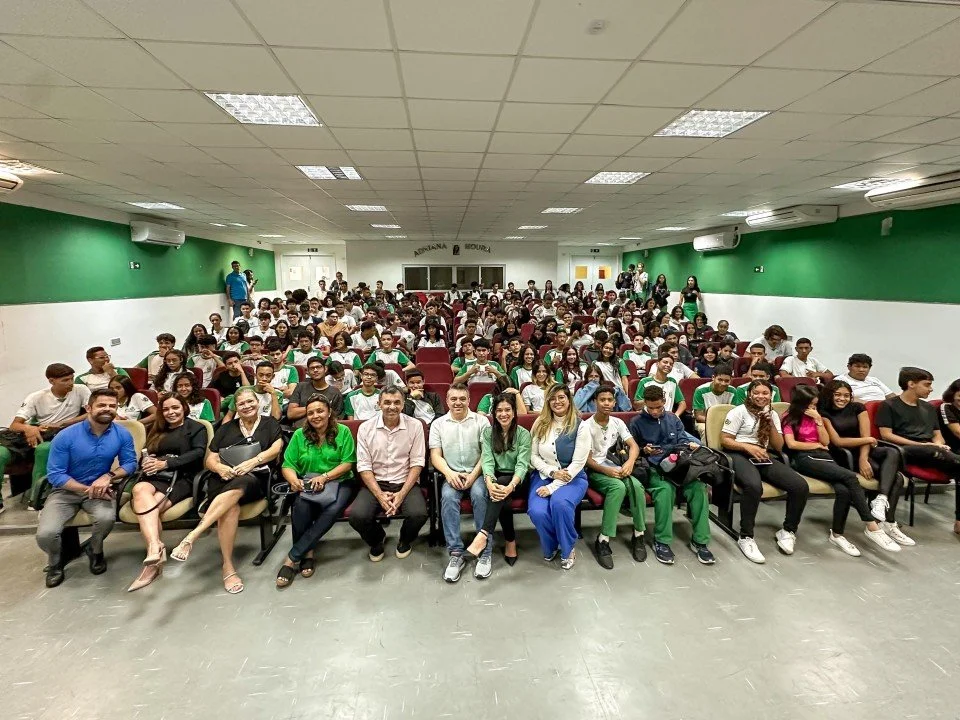
Inspirational Message to Students: We had an opportunity to give a short message to the students. Considering the economic conditions and lack of funds frequently mentioned about Brazil, it was a great opportunity for me to look into their bright eyes and remind them of one of my favorite leaders, Ataturk's, saying: “There is no hopeless situation, but there are hopeless people.” I encouraged them to take themselves out of hopeless situations and dare to ask for more. At the end of our short chat, I felt their passion to own their own future as we took photos and shook hands.
Second Stop: Universidade Estadual do Piauí (UESPI)
After our enriching visit to CEEP José Pacífico de Moura Neto, we proceeded to Universidade Estadual do Piauí where Evandro Alberto, the Rector of the University, welcomed us in a board room where we had a round table discussion followed by a socializing time with traditional food and coffee. This setting gave us an opportunity to chat one-on-one in an informal environment.
Discussion Topics:
Bilingual Teacher Needs: We talked about the bilingual teacher needs in Framingham Public Schools to support Portuguese-speaking students and serve their families.
University Introductions: We introduced our universities and discussed potential projects to improve collaboration between our institutions. Despite certain difficulties and bureaucracy, we identified immediate opportunities for professor and student exchanges as well as interdisciplinary research projects.
Curriculum Collaboration: There was high interest in our business IT and sports management programs. I offered to review and elaborate the curriculum together to serve our students better and meet the needs of upcoming trends.
Practical Considerations: We discussed logistical issues such as accommodation, funding, the best time to visit, and online options. We agreed that these were details we could overcome, embodying the spirit that if there is a will, there is a way. I reminded them of Hannibal’s quote in response to his generals telling him it was impossible to cross the Alps by elephant: "I shall either find a way or make one" (“Aut inveniam viam aut faciam”).
Emphasis on Human Resource: Although there was great interest in technology and AI, I emphasized the importance of human resources. I noted that while AI is important and beneficial, our greatest resource remains human intelligence. I restated that AI will not take people's jobs, but rather those who know how to use AI will.
Next Steps: I offered to connect our professors for one-on-one projects to initiate discussions and asked for their recommendations to start the collaboration process. Rector Evandro Alberto said he would form a committee to work on it and requested my help in giving the committee a starting point for our project, discussing, and drafting a road map.
Third Stop: Education Channel (Canal Educação)
Our next stop was a surprising and impressive experience. We had a short but game-changing tour to learn how Prof. Paulo Henrique took education to a different level even before the world wasn’t discussing online education, pre-COVID-19. Recognizing the need for education in remote locations, they established a TV school, which reminded me of the “No Child Left Behind Act of 2001” in U.S.
Studio Tour and Live Implementation: We entered the studio where a class was being conducted live. Three technicians were coordinating the live class to reach different schools online, with students participating from their locations. The system connected students across the state, allowing them to ask live questions and engage in discussions, even from small, remote classes. The classes were broadcasting live and available on YouTube, enabling students to watch or interact using TV, computers, or mobile devices.
Podcast Rooms: They had well-developed podcast rooms, and I had the chance to record a short podcast. This experience showed us that they were ahead of the game compared to many school districts globally.
Potential Collaboration: We discussed the following opportunities with using their technical infrastructure.
Shared Classes: Could we hold shared classes between our institutions?
Guest Speakers: Could we be online guest speakers for their classes?
Shared Podcasts: Could we create a shared weekly podcast connecting regions and their human capital?
Bilingual Education: Could we educate and support bilingual students in Framingham to teach them in both languages?
The answers were always positive, exciting us about the possibilities. As I said previously, we shared a vision and needed to take shared action, which they had already initiated.
Fourth Stop: Universidade Federal do Piauí (UFPI)
Our visit to UFPI was more intimate, involving a smaller group discussion with three professors and Rector Gildásio Guedes Fernandes.
Our team focused on the bilingual educator needs for the Framingham Public School system and potential collaboration opportunities between our universities. Since funding seemed a significant concern for UFPI, the discussion centered more on how we would finance potential collaborations. Despite these concerns, Professor Damerval Nunes displayed a passion for focusing on smaller projects and starting with baby steps to open wider doors.
The enthusiasm of Professor Damerval Nunes was inspiring, emphasizing that even small projects can lead to significant opportunities. His approach reminded us that taking incremental steps can eventually lead to broader and more impactful collaborations.
In conclusion:
The visit to both CEEP José Pacífico de Moura Neto and Universidade Estadual do Piauí was an enriching experience. It provided valuable insights into the educational practices in Teresina and highlighted the similarities and differences with our own systems. The commitment to education and sustainability at CEEP José Pacífico de Moura Neto, combined with the strong organizational culture fostered by Director Dorinha and the clear vision provided by Prof. Paulo Henrique, serves as an excellent model for schools everywhere. The collaborative discussions at Universidade Estadual do Piauí and Universidade Federal do Piauí laid a solid foundation for future partnerships and highlighted the shared commitment to enhancing educational opportunities.
The visit to the Education Channel was a game-changer. The innovative approach to education at Canal Educação, combined with their openness to collaboration, made me incredibly excited about the potential projects. This could be a tool to build a bridge, not a wall, between South and North America. The experience inspired me so much that I couldn't sleep thinking about the possibilities and how we could implement similar initiatives to enhance our educational offerings and foster international collaboration.
On our way back, we reflected on the potential collaborations with Piauí and how we could also improve connections between Framingham Public Schools and Framingham State University. During our discussions, we discovered potential opportunities at home, realizing that travel can provide a unique perspective on local opportunities. It was fascinating to learn more about our own institutions and the possibilities for collaboration while exploring international partnerships.